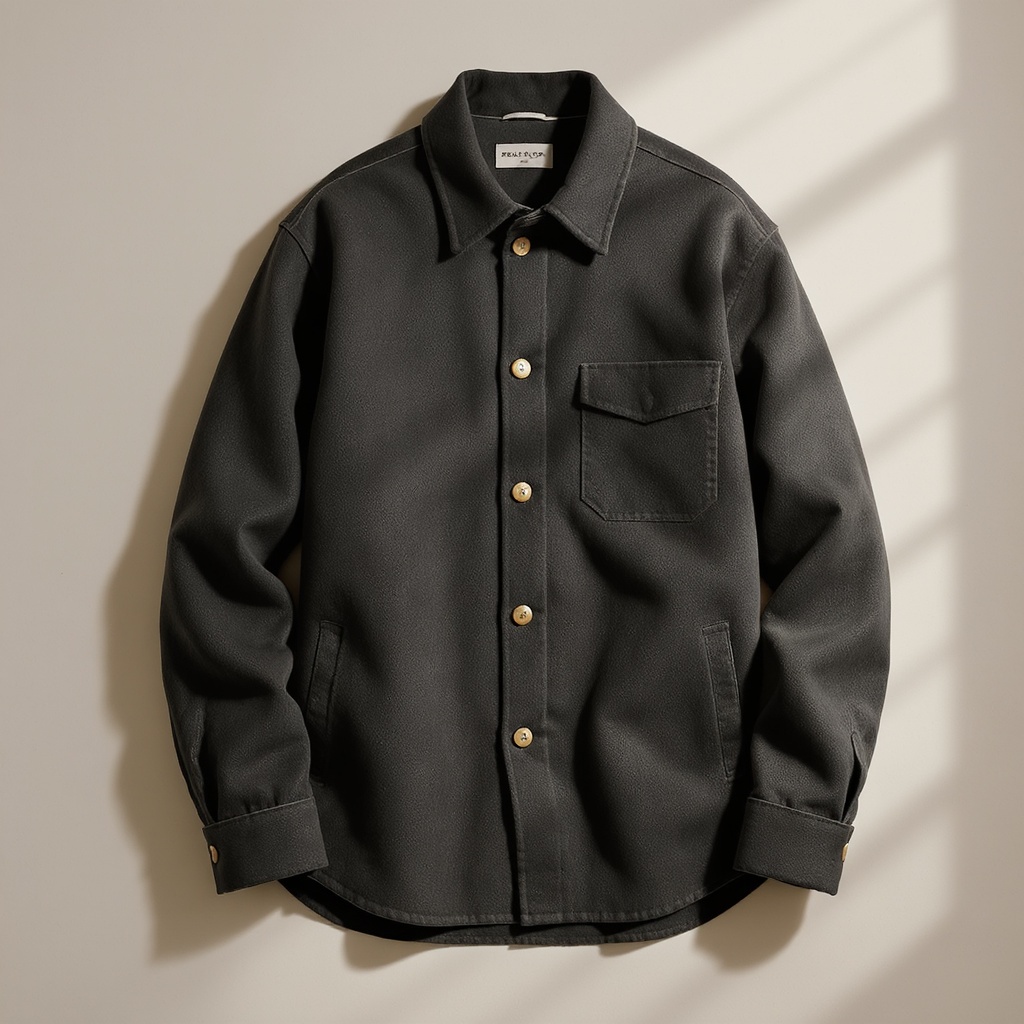
Fifty overshirts exist. Each is numbered, registered, and ships with a wax-sealed certificate of provenance. Once a number is claimed, it does not return to inventory.
Each piece is numbered, registered, and ships with a wax-sealed certificate of provenance.
The shell is 14oz domestic wool woven at American Woolen Co. in Connecticut — one of the oldest continuously operating wool mills in the country. The weave is a plain twill, tight enough to shed wind and light rain without a finish coat. At this weight it holds structure through a decade of daily wear. It does not pill. It does not thin. It gets better.
The buttons are cut from natural water buffalo horn — no two are identical in pattern. Horn buttons have been used in quality American workwear since the 1880s. They do not crack like shell. They do not melt like plastic. At each chest pocket closure, a horn button is attached with a four-hole lockstitch. They can be replaced individually if ever needed.
The lining is Bemberg cupro — regenerated from cotton linter, a byproduct of cotton ginning. It is breathable in a way polyester never is, and biodegradable at end of life. It drapes against wool without static. It regulates temperature across the full range of overshirt weather. The lining costs four times what a polyester replacement would. The difference is immediate and permanent.
Every detail below has a reason. At 14oz, the overshirt already resists casual wear. The construction is what makes it outlast the decade.
| Size | Chest | Shoulder | Length | Sleeve |
|---|---|---|---|---|
| S | 42" | 17.5" | 29" | 25" |
| M | 44" | 18.5" | 30" | 25.5" |
| L | 46" | 19.5" | 31" | 26" |
| XL | 48" | 20.5" | 32" | 26.5" |
Measurements are of the garment laid flat, doubled. Model wears M. Sized for layering over a light shirt.
The overshirt is cut and sewn at Apparel Production Inc. in New York City — a cut-and-sew shop with a long record in domestic small-run production since 1947. This run is 50 pieces. Short runs require more care per unit, and API agreed to take it because the materials justify the attention.
Every cutter and operator who touches the overshirt is on-site in New York. No subcontracting. No offshore finishing. The felled seams and double-stitched yoke add time to the run. That time is in the garment.
The overshirt arrives in packaging designed to match the object inside it.
Magnetic-lid rigid box, matte black exterior, uncoated natural interior. Reusable for storage.
The box is sealed with a Quillon wax stamp. Break it once. The seal closes the edition run.
A folded letterpress card with the supply chain: mill names, locations, founding years, and the overshirt's edition number.
Sixteen-page saddle-stitched booklet. The full Quillon story, the mill portraits, the philosophy behind the numbered edition system.
Organic cotton muslin dust bag, GOTS-certified. For long-term storage between seasons.
FSC-certified kraft outer carton. No plastic cushioning, no excess fill. The rigid box protects the overshirt; the carton protects the box.
Every overshirt ships with a wax-sealed certificate of provenance — a museum accession-style record of the object's complete origin chain: the mill, the button maker, the cut shop, the edition number, and the date it was made. Not a hang tag. Not a card insert. A document.
The certificate includes a field for the owner's name, filled in by hand before shipping. It is the only paperwork that will outlast the garment.
Inventory and payments go live when the reservation window closes. Until then, leave your email and your preferred edition range. You'll be first notified when your number is available to claim.
American materials, American stories — read the founder's letter →
No payment required now. You'll be notified when your edition is available to claim.